The Brief
Most Businesses Are Lying to Themselves About Where They Are With AI
Most businesses are further behind on AI than they let on. Honest self-assessment is the first useful move.
Ashleigh Greaves · 9 March 2026
2026 AI Predictions - Part 1 of 4
There is a growing gap between how businesses talk about AI and what they are actually doing with it.
Scroll through LinkedIn on any given day and you will see AI workflows, agent demos, and productivity hacks that make it look like the entire world has moved on.
The impression is that if you are not already building AI-native workflows and "agentic AI", you are behind.
The truth is far from that and the reality that we're seeing at simplefy.ai is quite different.
Only a small percentage of businesses are experimenting at that depth of building AI-native workflows or agents that do work behind the scenes .
Majority are still using AI in conversational chats for drafting, summarising, analysis and research.
This is good and useful, but efficiency gains are incremental and improvements in productivity are marginal, not multiplied.
And most are not being honest about it, or don't know the difference between AI in individual chats vs AI in workflows.
The real unlock is not individual productivity
Most organisations are still using AI at the individual level.
Someone uses ChatGPT to write a brief. Someone else uses Copilot to draft an email. A team lead uses an AI tool to summarise meeting notes. Each of these saves time. None of them change how the business actually works.
The real value is compounding productivity & insight that come from, not just using AI for a task in one conversation or one document, but across all of them.
For example, at simplefy.ai, every meeting is transcribed;but the unlock is not better meeting summaries. It is running AI across all of our team conversations over time, to surface patterns we would otherwise miss:
- Sales signals that appear across three separate client calls but are never connected
- Delivery friction that keeps showing up in different projects, but is never escalated
- Hiring themes that emerge from candidate conversations but are never formalised
- Leadership blind spots that only become visible when you see a pattern, not a single data point
- Market narrative drift, the slow shift in how clients describe their problems, which tells you where demand is moving before it shows up in the pipeline
Historically, this level of organisational intelligence either cost a fortune, required specialist teams, or was simply unattainable due to time and people constraints. AI changes that. But almost nobody is doing it yet.
The gap between conversation and implementation
Let's be direct about this.
The explosion of tools (Claude Code, Codex, OpenClaw, Bolt) continues to generate energy and excitement.
New products launch weekly (if not daily). Social media amplifies every demo, AI influencers magnify the hype, and AI products sell the outcome - without highlighting the true nature of implementation
And the impression builds that the world is further along than it is.
It is not.
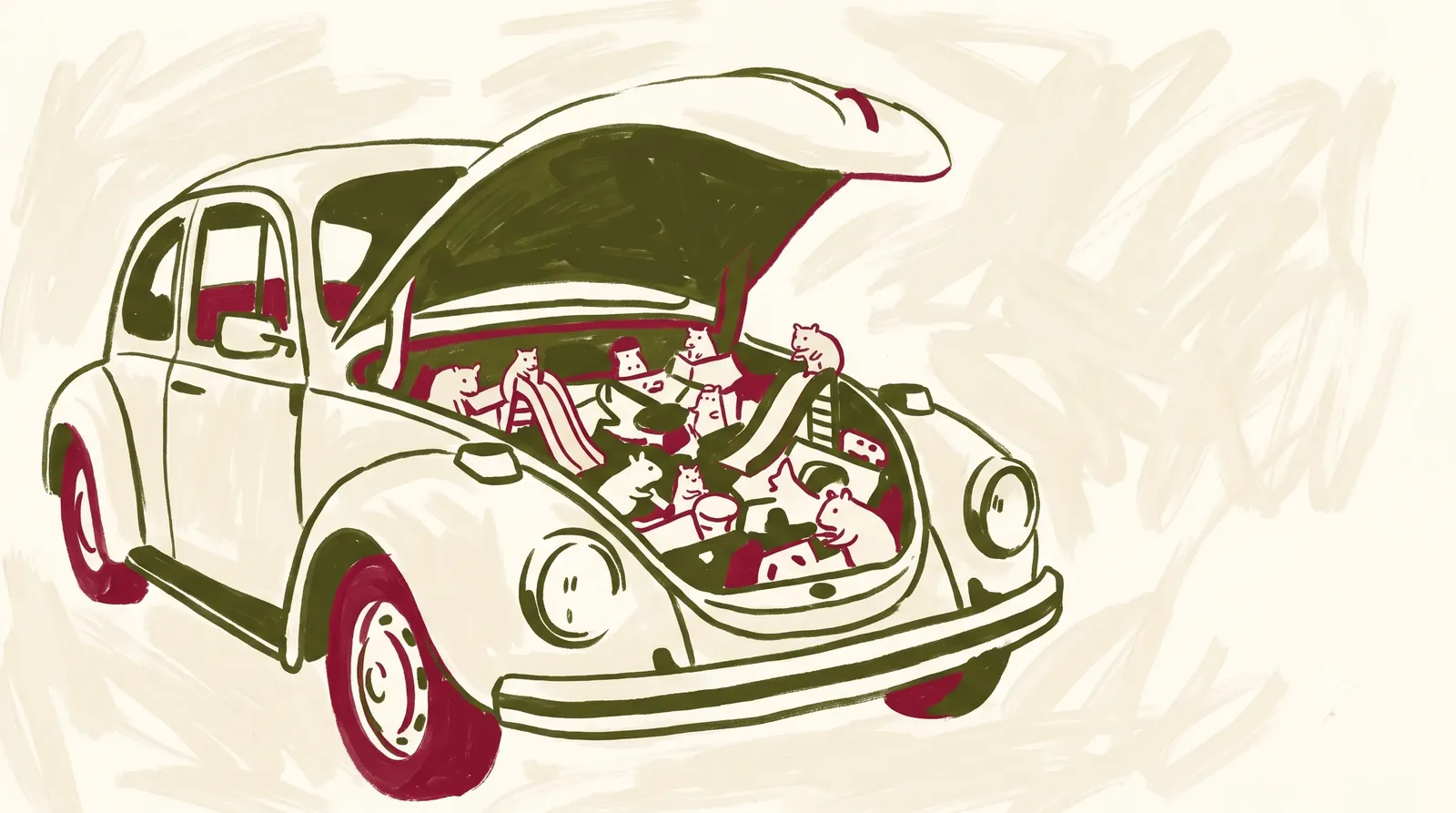
When you lift the hood on most organisations, they are not building compounding intelligence systems. They are not redesigning workflows around AI.
They are adding AI to the edges of existing processes and calling it transformation.
That is not a criticism. It is a good starting point. But it becomes a problem when businesses are not honest about where they actually sit.
Pretending to be further along than you are does not help your culture. It does not help your change management. It does not help your adoption. You cannot close a gap you refuse to acknowledge.
The businesses that will move fastest in 2026 are the ones that start by saying: here is where we actually are, here is where we want to be, and here is what needs to change to get there. That honesty is not a weakness. It is a precondition for real progress.
AI strategy is not a side document
This connects to a broader pattern. Most organisations still treat AI strategy as something that sits alongside the business strategy. A separate initiative. A parallel workstream. An innovation project managed by a working group.
That is not strategy. That is experimentation with a governance wrapper.
If AI does not:
- reshape how processes actually run
- change decision latency
- alter how roles work
- force trade-offs into the open
...then it has not been integrated. It has been appended.
In 2026, the businesses that get this right will stop asking "what is our AI strategy?" and start asking "where does AI change how we operate?" Those are fundamentally different questions. The first produces a document. The second produces redesigned workflows, updated role descriptions, and difficult conversations about what should change.
True AI transformation requires process redesign and widespread enablement, not pilots bolted onto old ways of working. The strategy conversation and the operating model conversation need to be the same conversation.
What this means for leaders
If you are reading this and recognising your own organisation in it, that is a good sign. The first step is always an honest self-assessment.
Ask yourself:
- Where is AI actually embedded in how we work, versus where is it an optional add-on?
- If our AI tools disappeared tomorrow, what would actually break?
- Are we measuring AI adoption by how many licences we have deployed, or by how many workflows have genuinely changed?
The compounding insight trend is real. It is where the advantage will sit. But the path to getting there starts with honesty about where you are today, not with pretending you are already there.
Get The Brief in your inbox
New AI thinking for business, straight from our team. We only send when we've got something worth your time.